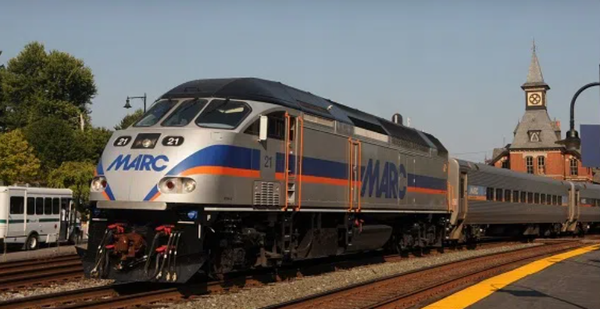
MDOT Receives $2 Million for Innovative Transit and Asset Development Initiatives The Maryland Department of Transportation (MDOT) has secured a combined $2 million through the FY 2025 Innovative Financing and Asset Concession (IFAC) Grant Program to support two initiatives aimed at expanding transit access and leveraging state-owned assets. Unlocking Transit-Oriented Development (TOD) through Innovative Financing on the Camden & Brunswick MARC Lines MDOT’s Office of Real Estate and Economic Development, in partnership with the Maryland Transit Administration (MTA), has received $1 million in IFAC funding to advance transit-oriented development opportunities at six stations along the Camden and Brunswick MARC lines. The effort will evaluate innovative financing approaches, public-private partnerships and redevelopment opportunities to activate underutilized properties and
support housing, jobs and economic growth. |
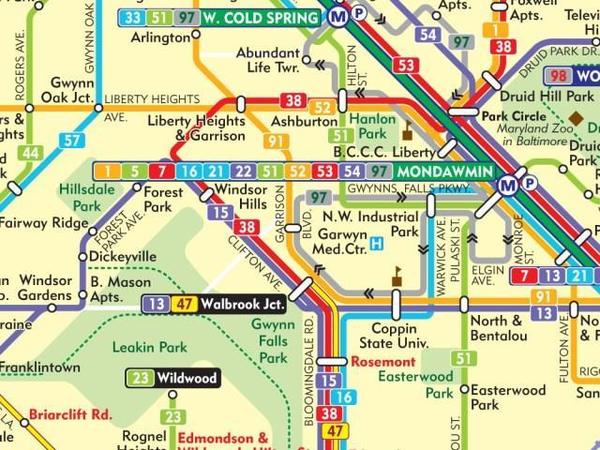
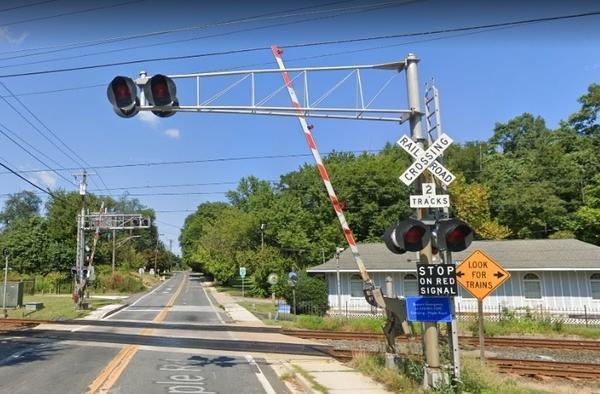
Regional Bus Network Asset Scan and Innovative Finance Analysis MTA has been awarded $1 million in IFAC funding to assess properties that could support future bus facilities, transfer hubs and transit-oriented development opportunities. The study will also examine innovative financing tools to help expand fleet capacity, improve travel times and advance the goals of the BMORE Bus Plan and Statewide Transit Plan, enhancing access to jobs and housing throughout the region. New MDOT Applications Under Active Consideration Maryland Grade Crossing Closure Study MDOT has submitted a $1.4 million FY 2025 - 2026 federal funding request through the Federal
Railroad Administration’s (FRA) Railroad Crossing Elimination (RCE) Program to undertake a statewide planning effort aimed at improving safety and mobility at highway-rail grade crossings. The study will evaluate approximately 1,200 active public and private crossings throughout Maryland and develop a data-driven prioritization framework to identify 20 to 25 locations for detailed assessment and future improvement recommendations. Activities include developing a screening methodology, conducting
site evaluations, engaging stakeholders and preparing recommendations for crossing closures, consolidations, grade separations and other safety enhancements, along with a future funding strategy. The study is intended to reduce the risk of collisions, improve the movement of people and freight, enhance access to communities and emergency services and establish a framework for targeted investments that will strengthen the safety, reliability and efficiency of Maryland’s rail and roadway
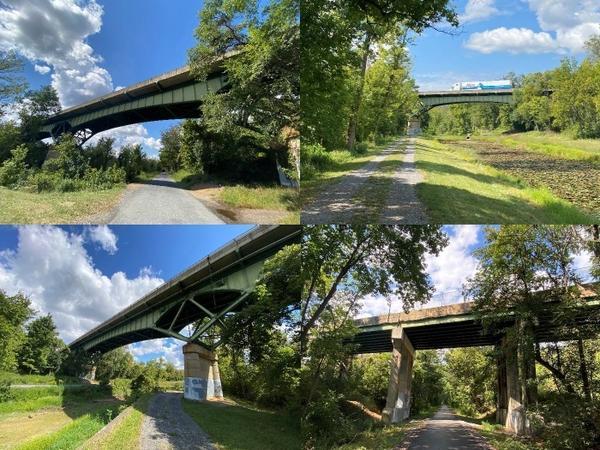
networks. US 522 Bridge Connectivity and Freight Mobility Plan The Maryland Department of Transportation State Highway Administration (SHA), in coordination with the West Virginia Department of Transportation (WVDOT), has submitted a FY 2026 request for $1.2 million through the Federal Highway Administration’s (FHWA) Bridge Investment Program (BIP) to advance a Planning and Environmental Linkages (PEL) study for two aging US 522 bridges that provide a vital connection between Maryland and West Virginia. The effort will examine
long-term solutions for structures approaching the end of their service life. While these bridges are safe to use, long-term solutions include the development of conceptual alternatives, traffic and freight analyses, environmental evaluations, resilience strategies and extensive stakeholder and public engagement activities. The study will address structural deficiencies, safety concerns and multimodal access needs while evaluating opportunities to enhance traffic operations and support economic
activity along this key regional corridor. Ultimately, the project is intended to preserve a critical Potomac River crossing, strengthen freight connectivity between the Mid-Atlantic and Appalachian regions, improve reliability for residents and emergency responders and guide future investments that will modernize infrastructure and increase resilience to extreme weather and other disruptions. Penn Camden Connector Construction Project The Maryland Department of Transportation Maryland Transit Administration (MTA) has applied for $201 million in FY 2026 funding through the Federal Railroad Administration’s (FRA) Consolidated Rail Infrastructure and Safety
Improvements (CRISI) Program to complete the final design and construction of the Penn Camden Connector in Baltimore. The project will establish a direct rail connection between the MARC Penn and Camden Lines through new track infrastructure, expanded train storage, freight improvements, and supporting rail systems. By reducing conflicts between passenger and freight operations, the project will improve reliability, increase capacity, and support future MARC service expansion. In the long term,
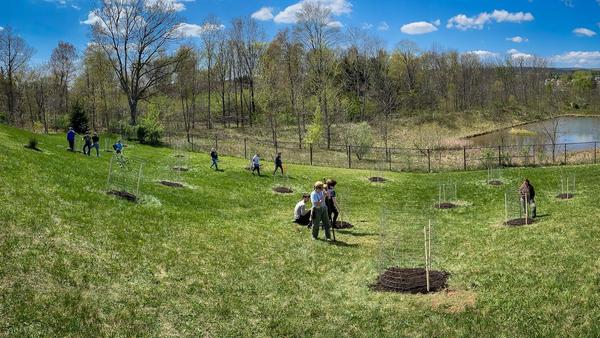
it will strengthen connectivity along the Northeast Corridor, enhance freight mobility, and improve the efficiency of commuter, intercity passenger, and freight rail operations. MDOT Urban Tree Grant Program Remains Open MDOT is continuing to accept applications under its (website) Urban Tree Grant Program, which helps fund tree planting efforts in communities impacted by transportation-related projects. Grants of up to $5,000 are available for eligible planting initiatives, with higher funding amounts offered for qualifying pocket forest projects. Applications are accepted on a rolling
basis, and materials for the upcoming planting cycle must be submitted by July 15. Prospective applicants are required to apply through the Maryland (website) OneStop portal and secure approval from their local County Forestry Board before submitting an application. For additional information on eligibility requirements or the application process, contact Nick
Kurtz, Urban Tree Grant Program Coordinator, at (email) [email protected]. Purple Line Small Business Assistance Program Remains Available in 2026 MDOT continues to offer financial assistance to small businesses experiencing impacts associated with Purple Line construction. The grant program is designed to help eligible businesses offset disruptions and maintain operations during ongoing construction activities along the corridor. Two application cycles remain in 2026, with submission deadlines set for July 31 and November 7. Businesses that meet program requirements may apply during either of the remaining rounds. Additional details regarding eligibility, application procedures, and program resources are available on the
(website) program website. Open Federal IIJA Opportunities* USDOT: Nationally Significant Multimodal Freight and Highways Projects (INFRA) Program (website) - Through this competitive program, federal funding supports transportation infrastructure investments that improve the movement of freight and people while enhancing the safety, efficiency, and reliability of the nation’s transportation network. Managed by the U.S. Department of Transportation’s Office of the Secretary, the INFRA program funds projects of national or regional
significance, including highway and bridge improvements, freight rail and intermodal facility access projects, grade crossing separations, port-related transportation improvements, wildlife crossings and other freight-focused infrastructure on designated national networks. The FY 2026 program also includes a dedicated funding category for commercial motor vehicle parking projects to help address the shortage of safe truck parking facilities nationwide. Applications are evaluated based on factors
such as safety benefits, economic competitiveness, state of good repair, innovation, project readiness, cost effectiveness and the ability to generate measurable regional or national transportation benefits. Additional consideration is given to projects that demonstrate strong non-federal funding commitments, advanced project development and the potential for timely implementation. For FY 2026, Track 2 Commercial Motor Vehicle Parking applications are due July 15, 2026. FHWA: National Culvert Removal, Replacement, and Restoration (Culvert Aquatic Organism Passage) Competitive Grant Program (website) - Through this
competitive funding opportunity, the Federal Highway Administration provides financial assistance for projects that replace, remove or repair culverts and weirs to improve or restore passage for anadromous fish while maintaining and enhancing surface transportation infrastructure. Eligible activities include construction as well as planning, design and other project development efforts. The program gives preference to projects that support threatened or at-risk fish species, expand upstream
habitat connectivity, strengthen the condition and resiliency of transportation assets and generate broader ecosystem, watershed and economic benefits. Applications are assessed based on conservation outcomes, regional and watershed significance, ecosystem improvements, project design and performance and overall readiness for implementation. For FY 2026 funding, applications are due July 16, 2026. FEMA: Building Resilient Infrastructure and Communities (BRIC) (website) - Federal funding through this program supports pre-disaster hazard mitigation projects that reduce risk to communities and
critical infrastructure from natural hazards. The program prioritizes infrastructure-based solutions that deliver long-term resilience benefits, including flood risk reduction, structural mitigation and protection of key community lifelines. Eligible activities include construction projects, as well as limited capability and capacity building efforts that support implementation. BRIC emphasizes cost-effective, technically feasible projects that are aligned with approved hazard mitigation plans
and demonstrate measurable risk reduction, with a focus on strengthening resilience for vulnerable populations and high-risk areas. For FY 2026, applications are due July 23, 2026. EDA: Public Works and Economic Adjustment Assistance Program (website) - This program provides competitive funding to support infrastructure, workforce and economic recovery projects in distressed communities. Eligible activities include public works construction, broadband and utilities, workforce facilities, business incubators, revolving loan funds and economic development planning aligned with a regional CEDS. Eligible
applicants include states, local governments, Tribes, nonprofits, economic development organizations and public-private partnerships. Applications are accepted on a rolling basis, with cost share required. *Note: Some of these federal grants are subject to ongoing federal decisions. Please check these links for any updated information. For more information about Open Federal Discretionary Grants, visit our (website) webpage. |
The following links provide information on the disclosure pages for members of the House and Senate: Visit our webpage (website) for additional resources, including: - MDOT's EV Charger Siting & Installation Partnering
Form
- Uniform Grants Guidance 2024 Revision
- Clean Cities and Communities: Funding Opportunities
- USDOT
IIJA Program
- USDOT Discretionary Grants Dashboard
- BIL Launchpad
- DOT Navigator
- MDOT’s Statewide Transportation Improvement Program (STIP)
- MDOT's Transportation Resilience Improvement Plan (TRIP)
|
Did someone share this with you? Sign up to receive future issues (webpage) here! Follow MDOT on (website) X, (website) LinkedIn and (website) Facebook! We want to support you! Reach out to discuss your capital priorities, federal funding opportunities and how we can work together.
Please visit the MDOT IIJA Federal Discretionary Grant Information webpage to learn more or to view previous newsletter editions by clicking the button below. Email (email) [email protected] with any questions or general inquiries. |
|